
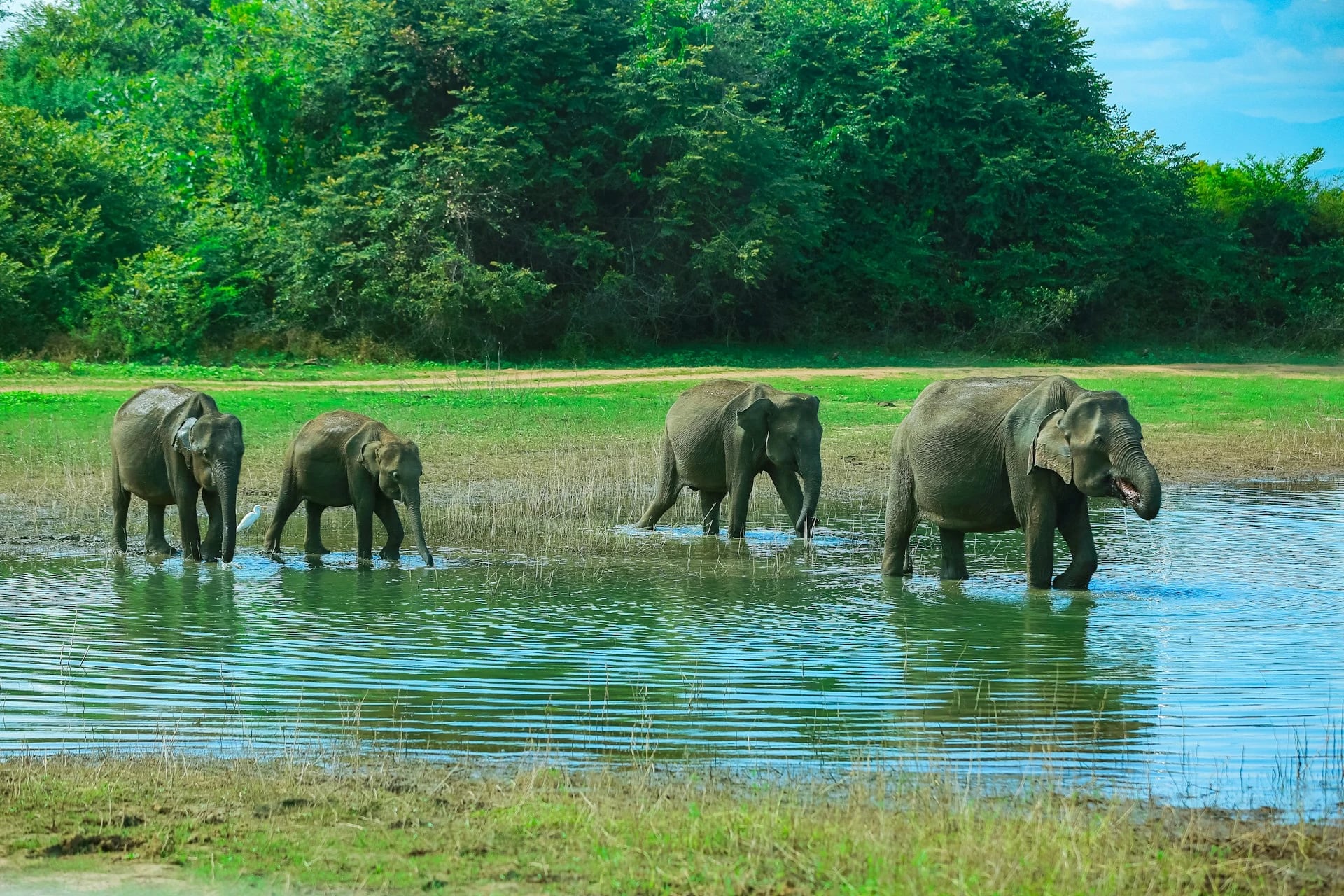





Seven hundred elephants and the grasslands they call home
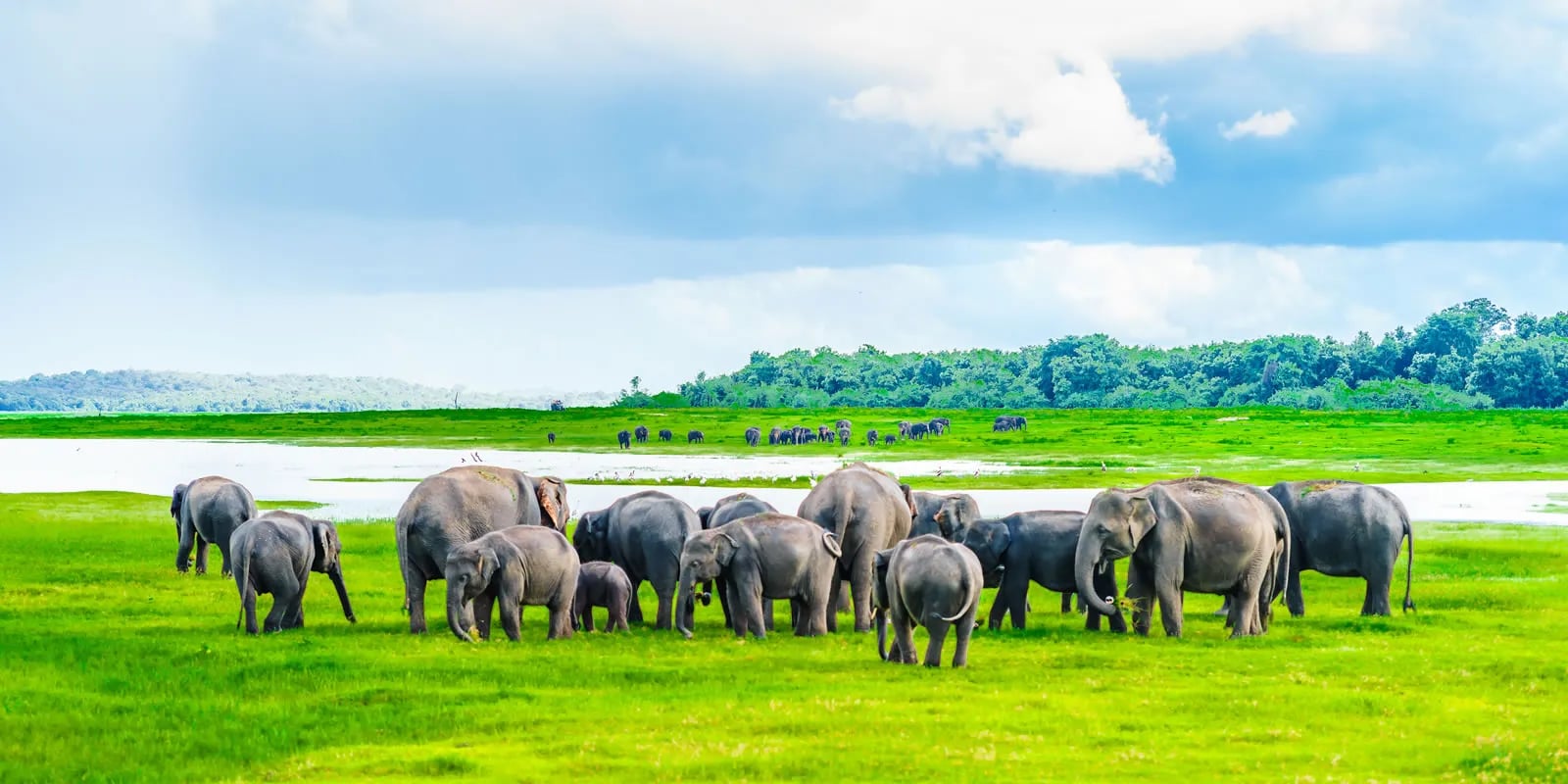
Udawalawe National Park is the finest place in Asia to watch wild elephants — a 308 km² expanse of open grassland and reservoir shoreline where over 700 individuals roam freely, visible at almost any hour of the day, in a landscape that makes every sighting a photographic gift.
Elephant Count
700+ Individuals
Park Area
308 km²
Bird Species
Over 180
From Colombo
165 km · 3.5 hrs
The Most Reliable Elephant Sightings in Asia
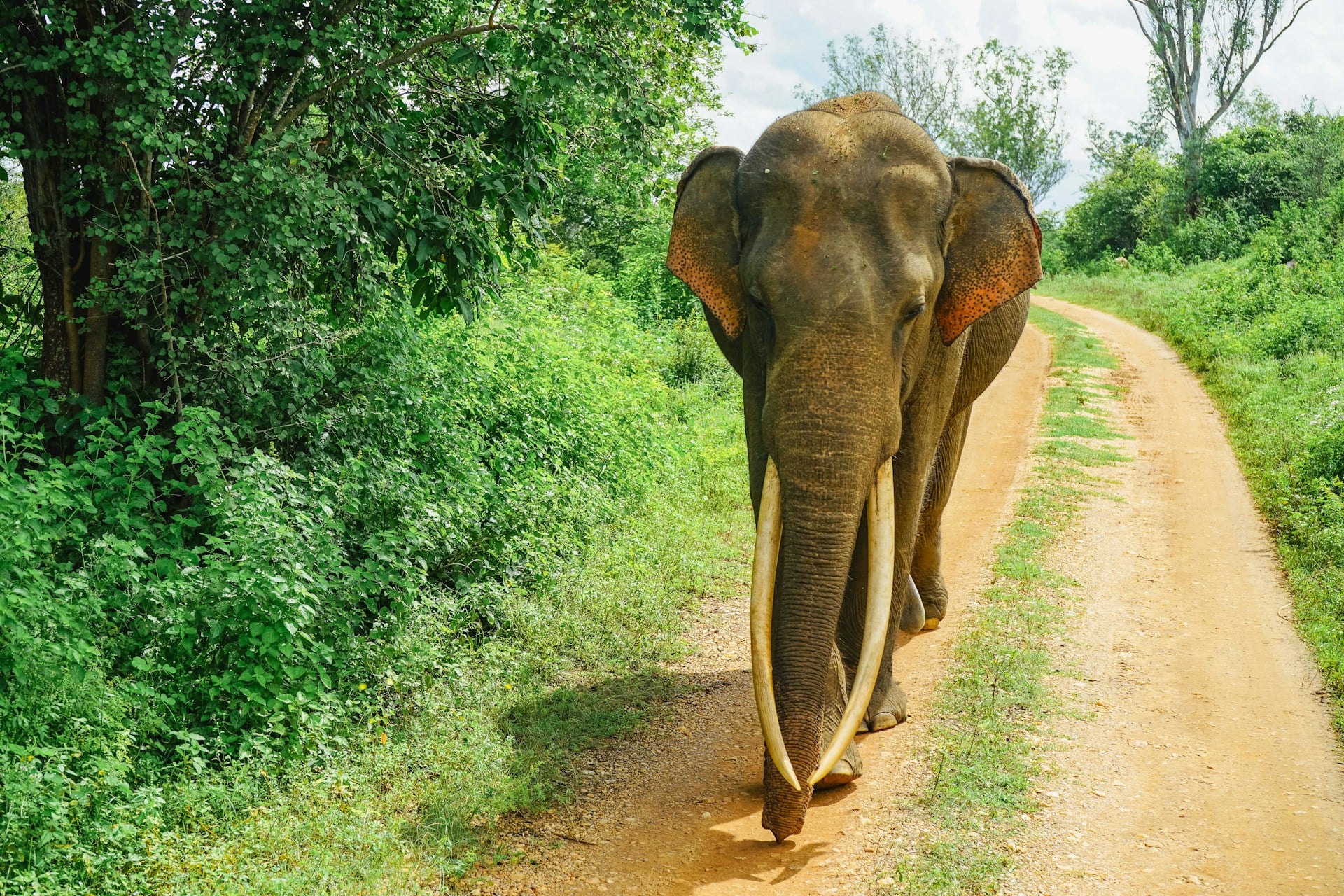
Udawalawe National Park is the finest place in Asia to watch wild elephants in their natural habitat. Over 700 individuals roam the park's grasslands, scrub and the shores of the vast Udawalawe reservoir — in herds ranging from small family groups to gatherings of 50 or more. Unlike many elephant destinations where sightings require luck and patience, in Udawalawe they require only eyes and sufficient time.
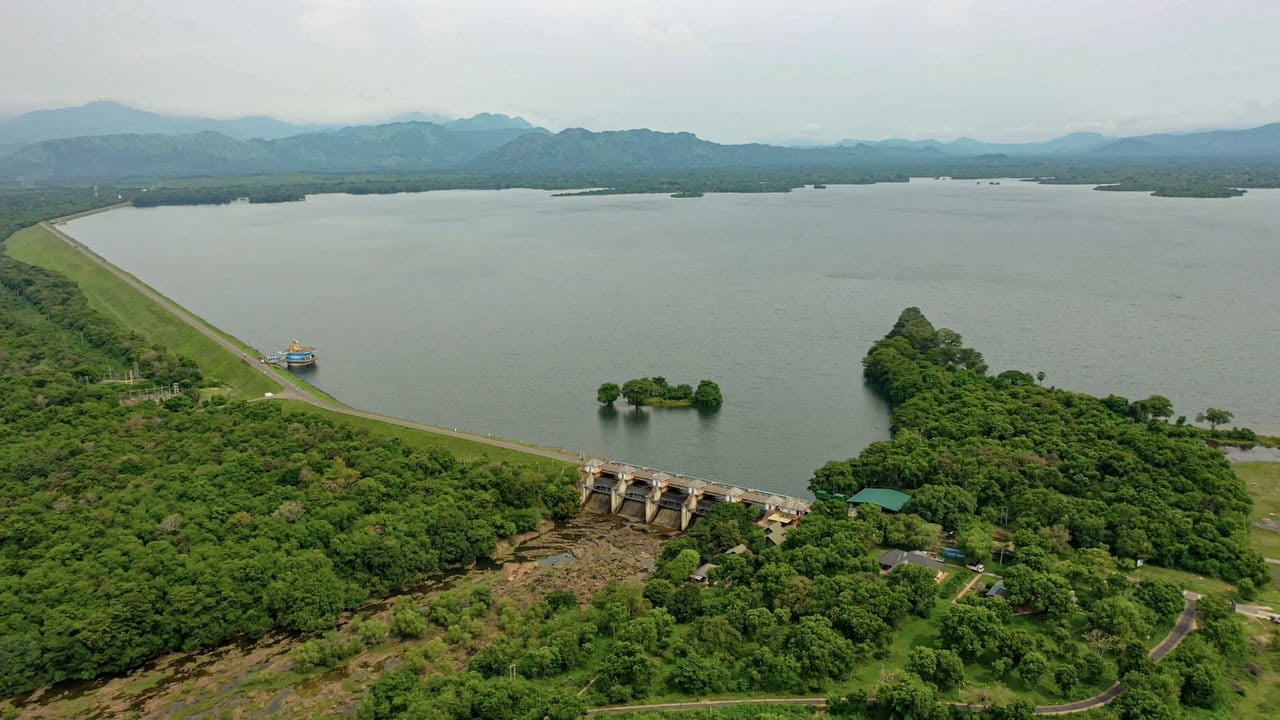
The Great Reservoir — Hub of All Life in the Park
The Udawalawe reservoir, created in 1969 when the Walawe River was dammed, is the ecological engine of the park. Its 3,700-hectare expanse of open water attracts elephants, water buffalo, crocodiles, marsh crocodiles and an extraordinary diversity of water birds to its banks at every hour of the day. At dawn and dusk, when herds gather at the water's edge, the scene is among the most spectacular in Asian wildlife watching.
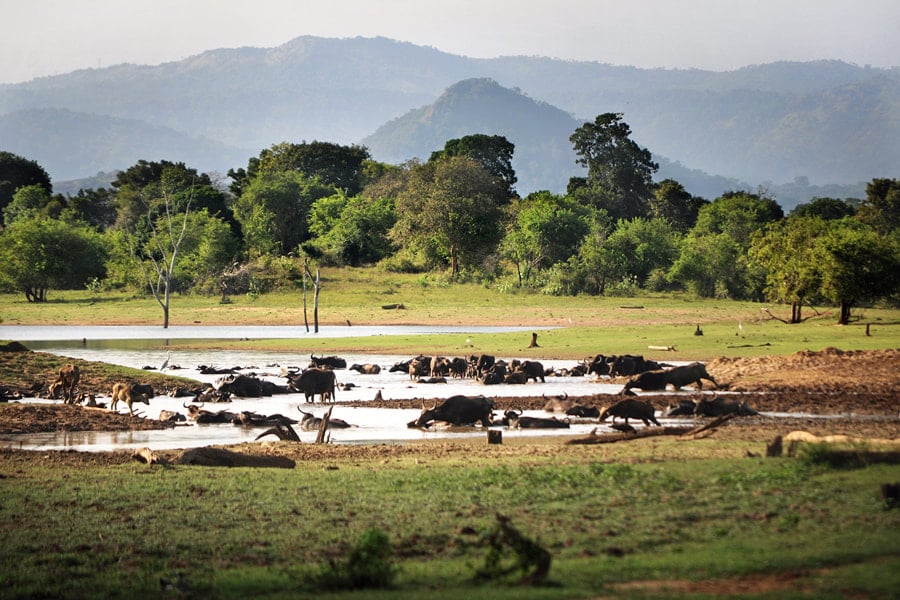
Buffalo, Leopards & the Open Grassland Plains
Beyond elephants, Udawalawe's open grasslands support one of the largest water buffalo populations in Sri Lanka — great grey herds grazing the reservoir margins that attract the leopards and jackals that follow them. The park's open canopy woodland, so different from the dense scrub of Wilpattu and Yala, means that animals are visible at distances that make for exceptional wildlife photography.
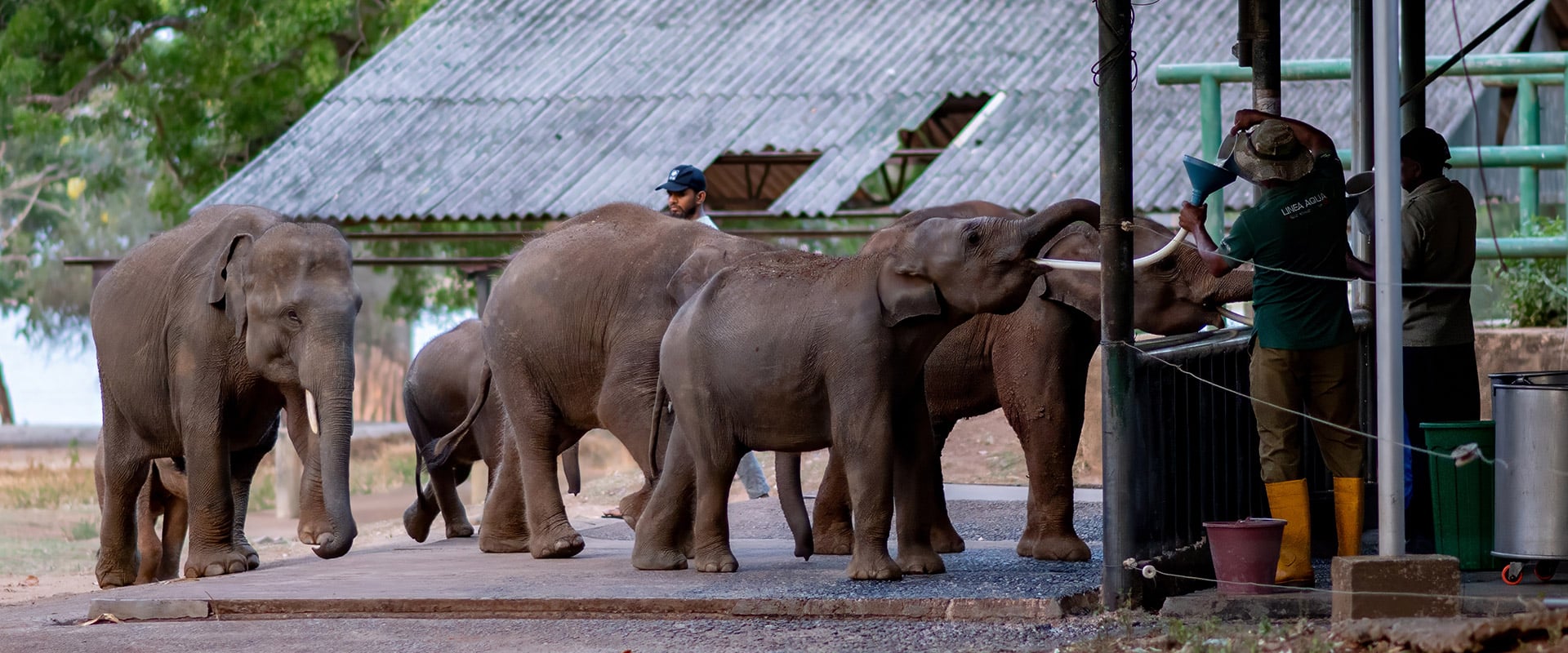
Elephant Transit Home — Orphans on the Road to Freedom
The Udawalawe Elephant Transit Home, operated by the Department of Wildlife Conservation, rehabilitates orphaned elephant calves and prepares them for release back into the wild. Feeding times — at 9 AM, noon, 3 PM and 6 PM — are open to visitors and offer an extraordinary close encounter with young elephants of varying ages in a setting that prioritises their welfare and eventual independence.
“In Udawalawe, an elephant encounter is not a lucky exception to the day — it is the day. By the third hour of a morning safari you have stopped counting and started simply watching, and the watching is everything.”
The Elephant Experience — Sri Lanka's Finest
Udawalawe's claim to be the best place in Asia to watch wild elephants is not marketing hyperbole — it is the considered opinion of wildlife biologists, safari operators and the hundreds of thousands of visitors who have experienced both Udawalawe and the famous elephant destinations of India, Thailand and Kenya. The park's combination of factors that produce reliable sightings is unique: the grassland-dominated landscape means elephants cannot hide in dense vegetation, the Udawalawe reservoir provides a fixed focal point around which herds congregate throughout the day, the park's population of over 700 elephants means the density of animals per square kilometre is extraordinary, and the fact that elephants are active in Udawalawe at all hours — including during the heat of the midday when other parks go quiet — means that a full-day safari almost guarantees multiple close encounters. The elephants move freely across the park without the seasonal and terrain constraints that limit sightings elsewhere. Calves are born year-round, and the social dynamics of the herds — the matriarchs managing their families, the young bulls testing their independence, the calves tumbling and playing — provide a richness of behaviour that wildlife enthusiasts find endlessly engaging. An experienced guide can identify many of the park's regular individuals by ear shape, tusk configuration and scarring, transforming the experience from a sighting into an ongoing narrative about specific animals and their lives.
The Elephant Transit Home — Orphans, Recovery & Release
Three kilometres from the main park entrance, the Udawalawe Elephant Transit Home is one of the most significant elephant conservation operations in Asia. The Transit Home receives orphaned elephant calves — animals separated from their herds by floods, conflict, injury or the death of their mothers — and provides the intensive care, milk feeding and gradual socialisation necessary to give them a chance of surviving when they are returned to the wild. The feeding sessions, held four times daily (9 AM, noon, 3 PM and 6 PM), are open to visitors and represent one of the most remarkable wildlife encounters available in Sri Lanka. The calves range in age from a few weeks to several years, and the progression from the smallest, most vulnerable milk-dependent infants to the larger juveniles preparing for release charts the entire arc of early elephant development in a single visit. The Transit Home's approach is deliberately non-habituating — staff do not encourage the calves to interact with visitors or accept human touch, keeping the animals as wild as possible in preparation for their eventual return to Udawalawe. The methodology has been so successful that released animals have integrated into the park's wild herds and in some cases been observed with calves of their own — a conservation outcome of genuine significance.
Beyond Elephants — Buffalo, Birds & the Open Landscape
Udawalawe's wildlife extends significantly beyond its famous elephants. The park's large water buffalo population — the largest in Sri Lanka — grazes the grasslands and reservoir margins in herds of up to 100 individuals, their massive curved horns and mud-caked flanks making them one of the most visually impressive sights in the park. Leopards follow the buffalo herds and are sighted more regularly here than their reputation for elusiveness might suggest — Udawalawe's open landscape means that leopards seen here are much more visible than in the dense scrub of Wilpattu, where they can vanish into cover in seconds. The bird life is exceptional: 180 species have been recorded, including the resident population of crested serpent eagles perching prominently on dead branches throughout the park, the grey-headed fish eagles that hunt the reservoir, the painted storks that nest in spectacular colonies in the trees around the water's edge, and the spot flycatcher — one of Sri Lanka's most beautiful endemic birds — that drifts through the woodland margins with its extraordinary ribbon-tail. The open landscape also makes Udawalawe one of the finest photography destinations in Sri Lanka — distances are manageable, the light in the late afternoon across the grasslands is extraordinary, and the subjects — especially the elephants — are both abundant and relatively tolerant of vehicles.
Safari Guide
Everything you need to know
Best Safari Time
Unlike many parks, Udawalawe is productive at almost any hour. Dawn (6:00 AM gate opening) and late afternoon (3:00–6:30 PM) are peak activity times, but elephants are visible throughout the day. A full-day safari — combining both sessions — gives the most complete experience.
Elephant Transit Home
Feeding sessions at the Elephant Transit Home run at 9 AM, 12 PM, 3 PM and 6 PM. Arrive 15 minutes before feeding time to secure a good viewing position. The 3 PM and 6 PM sessions are the busiest — the 9 AM session is often the most relaxed. No flash photography.
Best Season
Udawalawe is productive year-round — one of its great advantages over seasonal parks. The dry season (June–September) concentrates animals near the reservoir. The green season (November–April) produces lush landscapes and calving activity. There is no poor time to visit.
Photography
Udawalawe's open landscape is ideal for wildlife photography. Bring a 300–500mm telephoto lens for tight elephant portraits. The afternoon golden hour — 4:00–6:30 PM — produces the finest light on the grasslands. Position upwind and use a beanbag on the vehicle window instead of a tripod.
Where to Stay
Eco-lodges cluster along the road approaching the park entrance. Staying inside or adjacent to the park boundary reduces morning drive time significantly. Centauria Wild, Kulu Safaris and Athgira River Camping are among the most established options. Book ahead during school holidays.
Combine Your Trip
Udawalawe combines naturally with Yala (90 min east) for a two-park elephant-and-leopard safari itinerary. From the south coast, the drive from Ahangama or Mirissa takes under 2.5 hours. From Nuwara Eliya or Ella, the park is accessible in under 2 hours through scenic hill country roads.
Find Udawalawe
Udawalawe National Park
Sabaragamuwa Province, Sri Lanka · Asia's Best Elephant Safari
From Colombo
165 km · ~3.5 hrs
Park Area
308 km²
GPS Coordinates
6.4731° N, 80.8974° E