
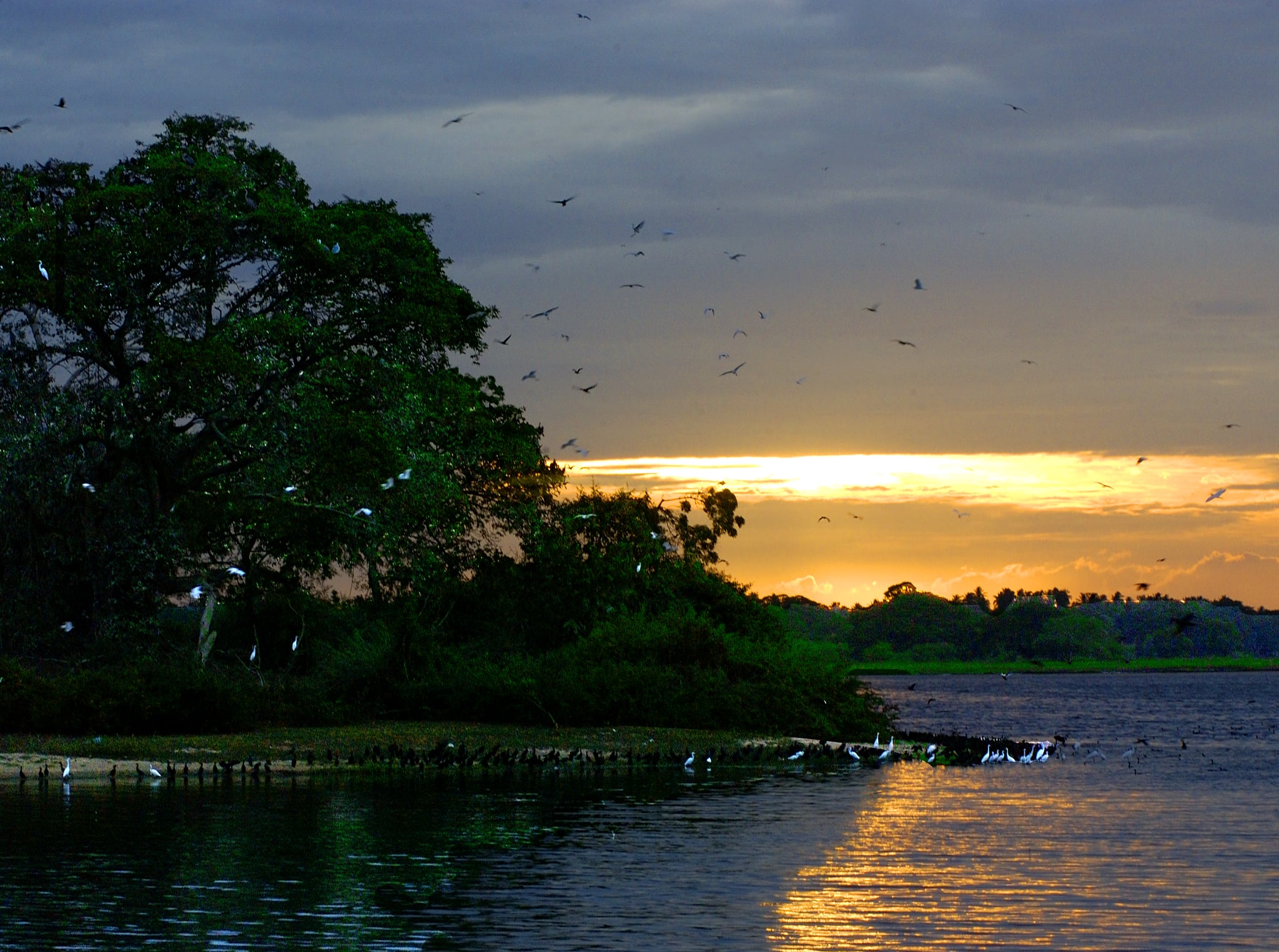





Where Asia's birds come to winter
Bundala National Park is Sri Lanka's finest wetland bird sanctuary — a Ramsar Wetland of International Importance and UNESCO Biosphere Reserve where over 200 bird species gather each year, including thousands of lesser flamingos and migratory shorebirds from across Asia and Europe.
Flamingos
Nov – Mar Season
Avg. Temperature
26 – 34 °C
Bird Species
200+ Recorded
From Colombo
245 km · 4.5 hrs
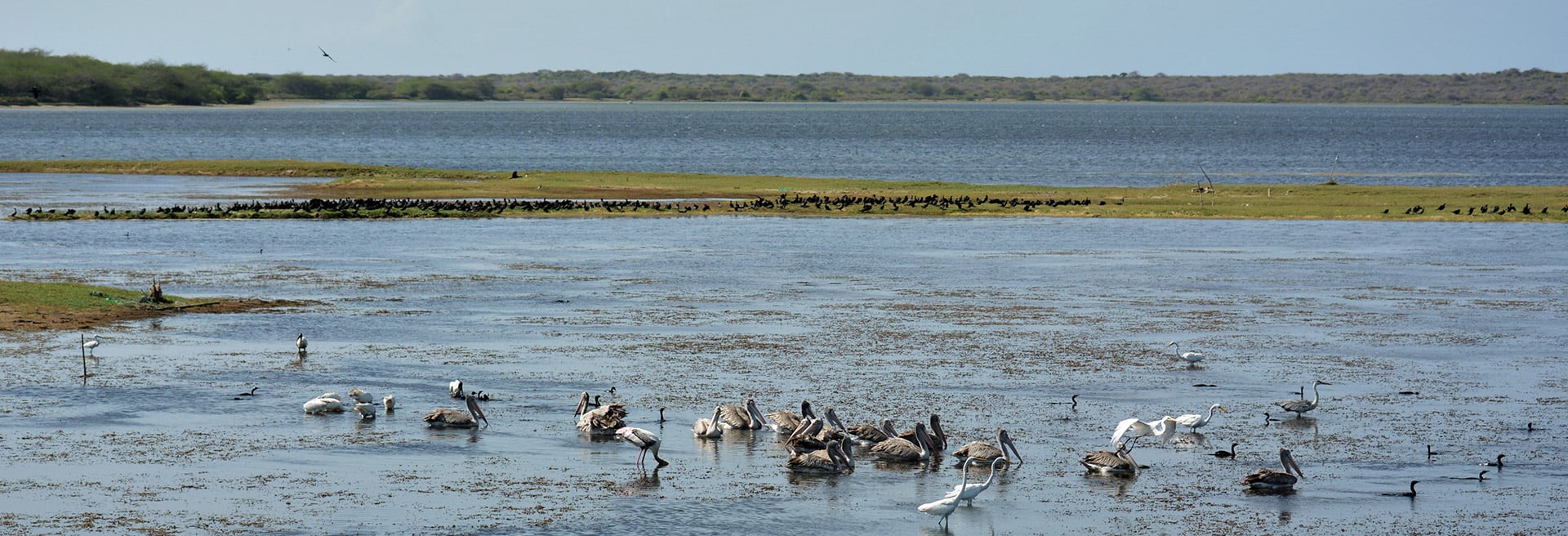
Sri Lanka's Finest Wetland Bird Sanctuary
Bundala National Park is Sri Lanka's first Ramsar Wetland of International Importance and a UNESCO Man and the Biosphere Reserve — a coastal strip of interconnected lagoons, brackish lakes and dry scrub jungle that forms the most important wintering ground for migratory shorebirds and waterbirds on the entire island. Between November and March, the lagoons hold tens of thousands of birds from across Asia and Europe.
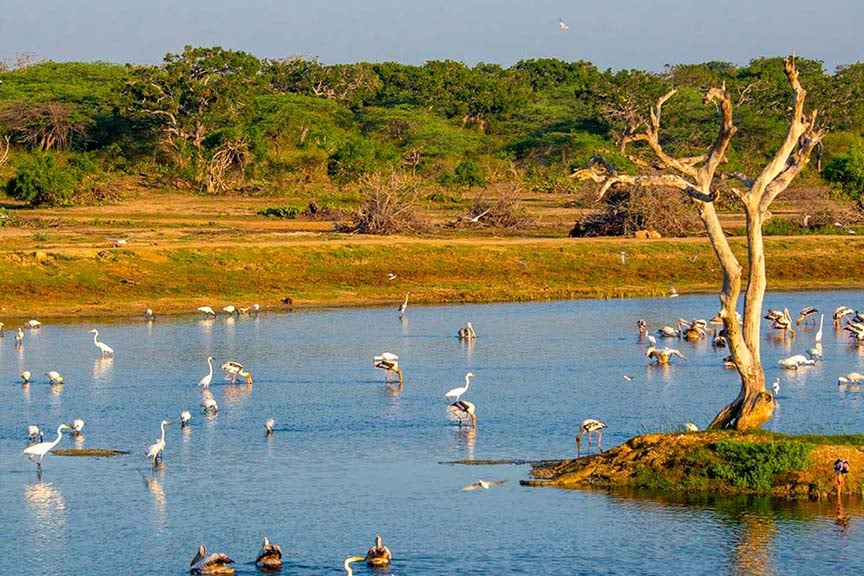
Lesser Flamingos — Thousands on the Lagoon at Dusk
Bundala's most dramatic wildlife spectacle is the arrival of lesser flamingos — sometimes in flocks of several thousand — that gather on the shallow lagoons from November onwards, turning the water pink in the evening light. Sri Lanka's largest and most reliable flamingo congregation, Bundala's flamingo season is one of the most visually spectacular wildlife events on the island.
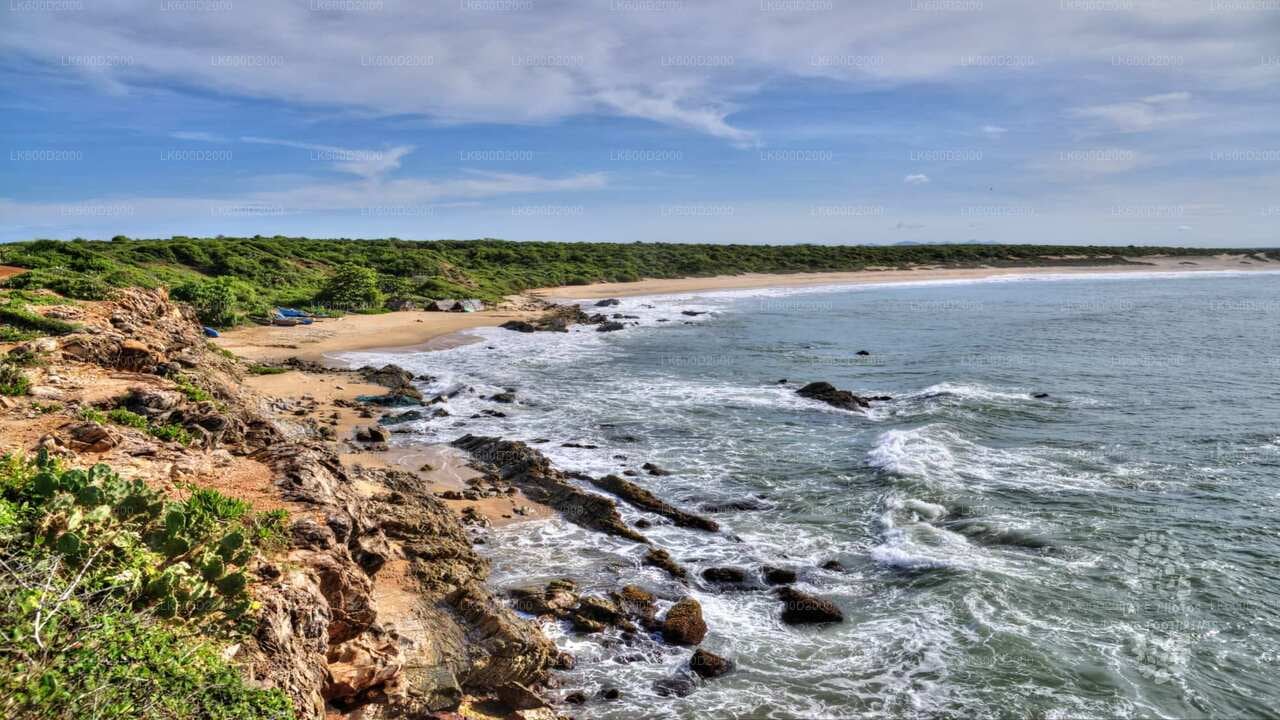
The Great Migration — Asia's Birds Winter Here
Every northern winter, Bundala receives an extraordinary influx of migratory birds from breeding grounds across central Asia, Siberia and northern Europe. Waders, ducks, terns and raptors arrive in numbers that can total over 50,000 individuals in a single day's count — making the park one of the top ten bird migration staging grounds in South Asia.
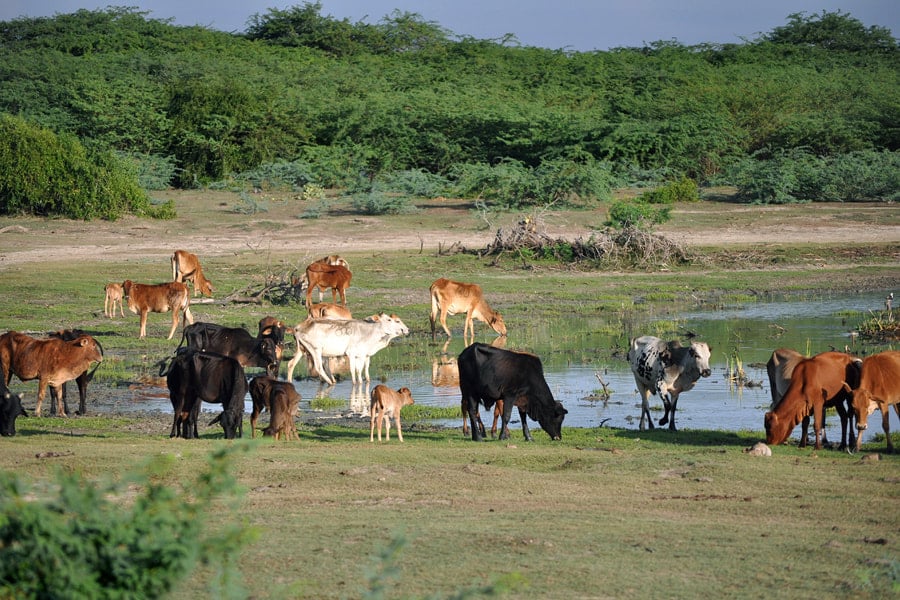
Elephants, Crocodiles & the Dry Zone at Its Wildest
Beyond its extraordinary birdlife, Bundala supports a healthy population of Sri Lanka elephants that move through the park year-round, mugger crocodiles in every lagoon, spotted deer, wild boar, the occasional leopard, and five species of sea turtle that nest on the beaches between the park's coastal stretch and the Indian Ocean.
“A flock of five thousand flamingos lifting off the lagoon at sunset — wings black and carmine against the sky, the sound of their collective departure like distant thunder — is one of those moments you do not anticipate and never forget.”
The Flamingos & the Great Winter Migration
Bundala's international significance rests on its role as a migratory bird staging ground of the first importance. The park's five interconnected lagoons — Bundala, Malala, Emiliyagoda, Gonnoruwa and Mahakenalegama — form a chain of shallow, brackish water bodies that provide feeding habitat for a staggering diversity of waterbirds and waders between November and March. The lesser flamingo — which does not breed in Sri Lanka but winters here in numbers rarely seen elsewhere in South Asia — is the park's signature species. Flocks of 2,000 to 10,000 flamingos gather on the main lagoon through the peak months, feeding in the shallows with the pink of their plumage intensifying in the low light of dusk. They arrive in late October and depart by April, and the spectacle of a large flock taking flight — wings flashing black and carmine against the sunset sky — is one of the most dramatic bird moments available anywhere in Sri Lanka. The migratory shorebirds that accompany them are no less remarkable: greater flamingo, painted stork, Asian openbill, black-headed ibis, great white pelican, Eurasian spoonbill and dozens of wader species from the Palearctic region arrive alongside large populations of resident waterbirds that breed in the park year-round.
The Lagoons, the Scrub & the Coastal Wilderness
Bundala's landscape is as distinctive as its wildlife. The park occupies a narrow coastal strip between the Hambantota road and the Indian Ocean — roughly 3 kilometres wide and 20 kilometres long — in which five major lagoons, seasonally flooded grassland, dense dry scrub jungle and beach strand create a mosaic of habitats with a combined biodiversity that is entirely disproportionate to its modest size. The scrubland between the lagoons holds an outstanding dry-zone flora — thorny Ziziphus and Salvadora thickets, tall Euphorbia columns, and the twisted Ranawara with its brilliant yellow flowers — within which nesting herons, cormorants and storks compete for roosting sites with the resident raptors: crested serpent eagle, white-bellied sea eagle, Brahminy kite and the elegant black-shouldered kite. The beach provides nesting sites for five species of sea turtle — green, leatherback, loggerhead, olive ridley and hawksbill — and the coastal waters are periodically visited by spinner dolphins and, in the deeper offshore waters, by sperm whales. A full-day safari in Bundala covers all five lagoons and both the main road and the circular coastal track, revealing a different character at each water body depending on the season and the time of day.
Getting There, Best Season & Planning Your Visit
Bundala National Park is located on the south coast of Sri Lanka, 245 kilometres from Colombo and 18 kilometres east of Hambantota town along the A2 coastal highway. It is one of the most accessible national parks on the island — the main entrance at Wirawila is reached directly from the highway, and the park can be done as a day trip from Tangalle (35 km west), Tissamaharama (10 km east) or even from the Galle-Mirissa coastal strip (110 km west) with an early start. The peak season is November to March, when the migratory birds are present and the flamingos arrive in large numbers. April to September sees fewer birds but the resident wildlife — elephants, crocodiles, breeding herons, bee-eaters and raptors — remains excellent year-round. Half-day morning safaris from 6:00 AM are the most productive for birds; a full day allows the lagoon circuit to be completed in both directions. Unlike the larger national parks, Bundala does not require a guide by regulation, but an experienced birding guide significantly enhances the visit. The entry fee and jeep hire are organised at the Wirawila entrance gate.
Birder's Guide
Everything you need to know
Flamingo Season
Lesser flamingos arrive from late October and peak between December and February. Evening drives (3–6 PM) offer the best flamingo photography as the flocks gather on the main lagoon in the golden hour. Morning drives give the best overall bird diversity.
Best Time to Visit
November to March is the prime season for migratory birds and flamingos. Year-round visits are rewarding for resident wildlife — elephants, crocodiles, nesting waterbirds and raptors are present throughout the year. Avoid the heat of midday (11 AM to 3 PM).
Birding Equipment
Bring a 8×42 or 10×42 binocular and, if you have one, a spotting scope — the lagoons are wide and distant birds are best seen with more magnification. A field guide to the birds of Sri Lanka is invaluable. A camera with a 400mm+ telephoto lens produces the best results.
Safari Route
The full lagoon circuit takes 4–5 hours. A half-day morning safari (6–11 AM) covers the most productive lagoons. Jeep hire is arranged at the gate. If combining with Yala, Bundala is 18 km west of Yala Block I and makes an excellent morning addition to a Yala afternoon.
Where to Eat
Tissamaharama town (10 km east) has the best concentration of restaurants near the park — the guesthouses along the lake road serve good Sri Lankan rice and curry. Pack snacks and water for the safari. The town is also the base for Yala National Park safaris.
Where to Stay
Tissamaharama is the most convenient base — 10 km from the Bundala entrance and 20 km from Yala Block I. Priyankara Hotel and the guesthouses around Tissa Lake offer excellent value. Tangalle (35 km west) provides more upmarket coastal accommodation for those combining beach and birding.
Find Bundala
Bundala National Park
Southern Province, Sri Lanka · Ramsar Wetland · UNESCO Biosphere Reserve
From Colombo
245 km · ~4.5 hrs
From Tissamaharama
10 km · 15 min
GPS Coordinates
6.1937° N, 81.2034° E