Cycling Sri Lanka

Weligama Taxi & Shuttles Number 01

Weligama Taxi & Shuttles Number 01

Hero Banner
Dry Zone & Hill Country · On Two Wheels

Sri Lanka's finest
cycling routes

From flat village loops around Sigiriya to demanding tea-estate climbs above Kandy — and the legendary cycle through the ruins of Polonnaruwa in between — Sri Lanka rewards the rider with extraordinary variety. Four routes, four very different rides, four of the most memorable half-days available on two wheels in Asia.

Easy

Flat terrain, gentle pace

Moderate

Longer distance or warmer climate

Hill

400m+ climbing, basic fitness needed


Sigiriya · 2.5–3 hrsEasy18 km

Sigiriya Village Loop

Quiet rural lanes, paddy fields and views of the rock from every angle

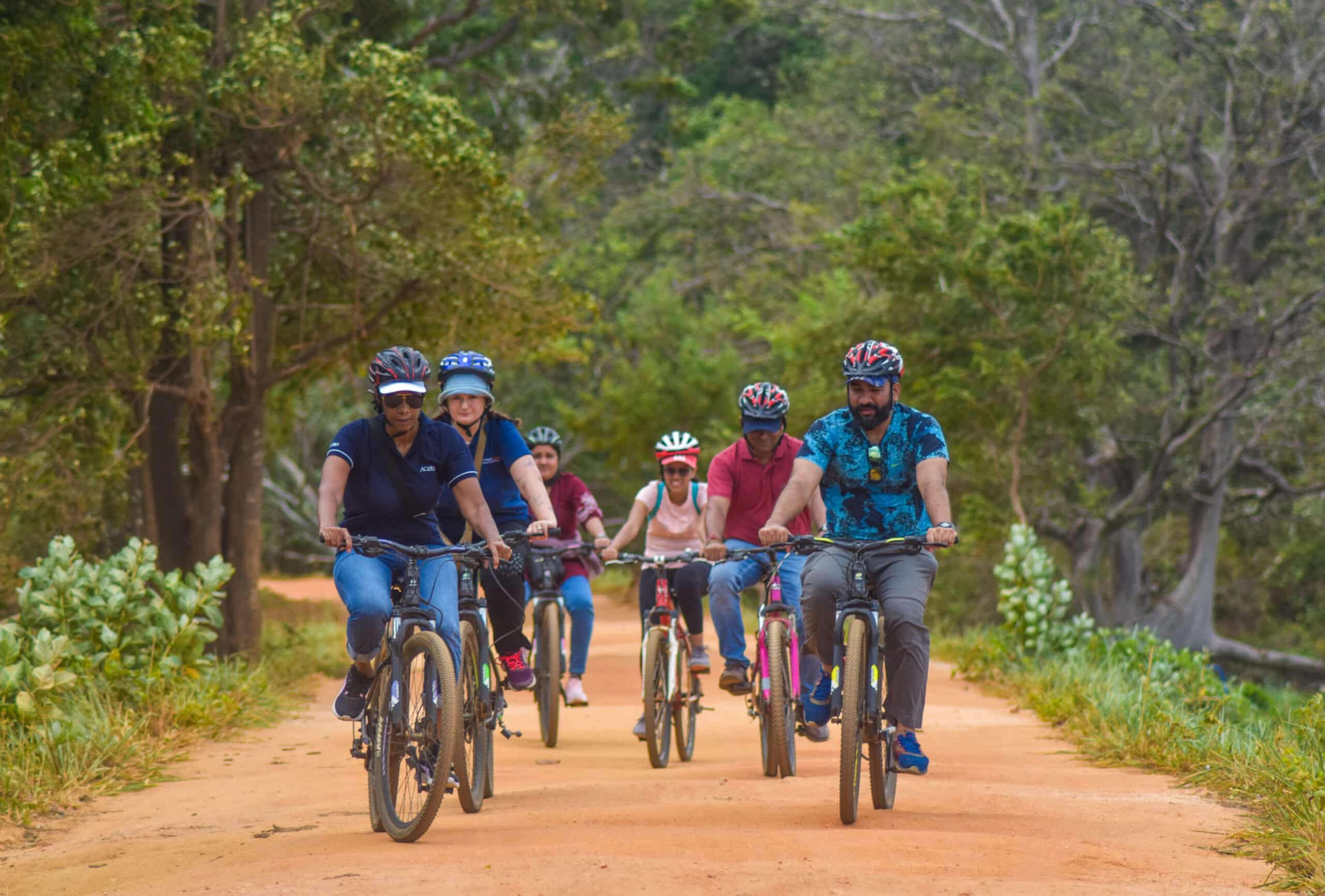
The route begins from any of the cycle hire shops in Sigiriya village and follows a gently rolling loop through the agricultural land that surrounds the rock — an ancient landscape of bunded paddy fields, brick-walled village houses, working bullock paths and the network of small tanks and irrigation channels that have sustained farming here for over a thousand years. The terrain is essentially flat with one or two short rises that any reasonably fit rider can pedal up without difficulty, and the surface is a mixture of paved village roads, hard-packed earth tracks and short sections of paddy bund. The cycling itself is easy enough that the rider has time to take in the surroundings: working farmers in the fields, children walking to school, water buffalo grazing in the marshes, the constant changing perspectives on Sigiriya rock as the route loops around it. A typical ride includes a stop at the Pidurangala viewpoint base (the smaller rock with the better view of Sigiriya itself), a tea break at a village kade (small shop), and possibly a swim in one of the tanks if the season is right. Best ridden between 6:30 and 10:00 AM before the dry-zone heat builds, or 3:30 to 6:00 PM in the late afternoon.

🌅

Start by 7:00 AM — the dry-zone heat by 10 AM is intense

🚲

Hire bikes at Sigiriya village (LKR 800–1,500 for half day)

🏛️

Add a Pidurangala stop for the classic Sigiriya rock photo

💧

Carry 1.5+ litres of water — limited refill points en route

Sigiriya Village Loop
Easy
18 km

Habarana · 3 hrsEasy22 km

Habarana Eco-Village Trail

Forest tracks, paddy fields and the chance of wild elephants on the trail

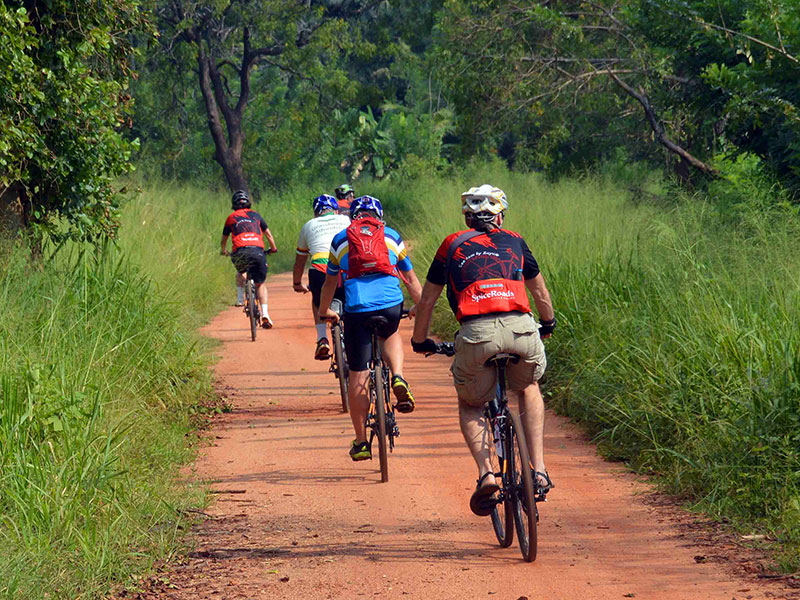
The Habarana ride is the wildest of the four routes on offer and the closest the dry zone gets to true off-road cycling. The route leaves the town on a paved road for the first 3 kilometres before turning into a network of unpaved jeep tracks that loops around the southern boundary of the Hurulu Forest Reserve, passes a series of small irrigation tanks (which the elephants use heavily, particularly at dawn and dusk), threads through eco-village settlements where the landscape is essentially unchanged from a generation ago, and rejoins the main road for the return into town. The cycling itself is moderate in effort — long stretches of flat earth track, occasional short climbs, no technical features — but the conditions need respect: the heat is intense after 10 AM, the dust on the unpaved sections can be heavy in the dry months, and the chance of meeting an elephant at close quarters on the trail is real and requires a guide who knows the herd's movements. Always ride this route with a local guide; they cost LKR 2,000–3,000 for the morning and prevent the route from going badly wrong. Sightings of peacocks, sambar deer, water monitors and the occasional wild elephant are routine.

🐘

Elephant encounters possible — local guide essential

🌅

Dawn rides best for wildlife and coolest conditions

🥾

Mountain bike or hybrid required — not for road bikes

👨‍🌾

Local guide LKR 2,000–3,000 — non-negotiable for safety

Habarana Eco-Village Trail
Easy
22 km

Polonnaruwa · 4–5 hrsModerate15 km

Polonnaruwa Ancient City

Cycling among the ruins of a 12th-century capital — the iconic Sri Lankan cycle

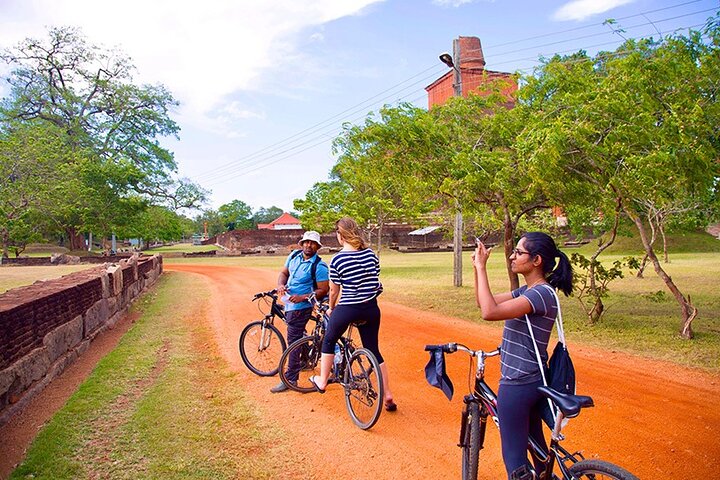
Polonnaruwa is a UNESCO World Heritage Site and one of the most extensive ancient capitals in South Asia — the ruins are spread over 6 kilometres from north to south and walking them in the heat is genuinely difficult. Cycling solves the problem completely: bikes are available for hire at the main entrance for around LKR 500 per day, the routes through the site are fully shaded by old trees, and the spacing of the major monuments turns out to be perfectly designed for short pedaling sections punctuated by long, contemplative explorations on foot. The standard route runs roughly south to north: Royal Palace and the carved Audience Hall first, then the famous Quadrangle with its four iconic structures (Vatadage, Hatadage, Atadage, Thuparama), past the colossal Rankot Vihara stupa, the elegant Lankatilaka image-house with its 17-metre standing Buddha (now headless), and finishing at the spiritual climax of the visit — Gal Vihara, where four Buddha statues carved directly from a single granite face are arguably the finest stone sculptures in Sri Lanka. The total cycling distance is around 15 kilometres but most riders actually pedal far less, dismounting frequently to explore the monuments on foot. The visit takes 4 to 5 hours including stops, and the whole experience benefits enormously from being read about in advance.

🚲

Bike hire at the entrance — around LKR 500 for the day

🎫

Park entry approximately USD 30 — buy at the main ticket office

🏛️

Allow 4–5 hrs — the site is too vast to rush

👕

Shoulders and knees covered for temple sections (sarong useful)

Polonnaruwa Ancient City
Moderate
15 km

Kandy · 3–4 hrsHill20 km · 400 m climb

Kandy Tea Estate Climb

Hill country cycling through tea gardens, Buddhist temples and panoramic viewpoints

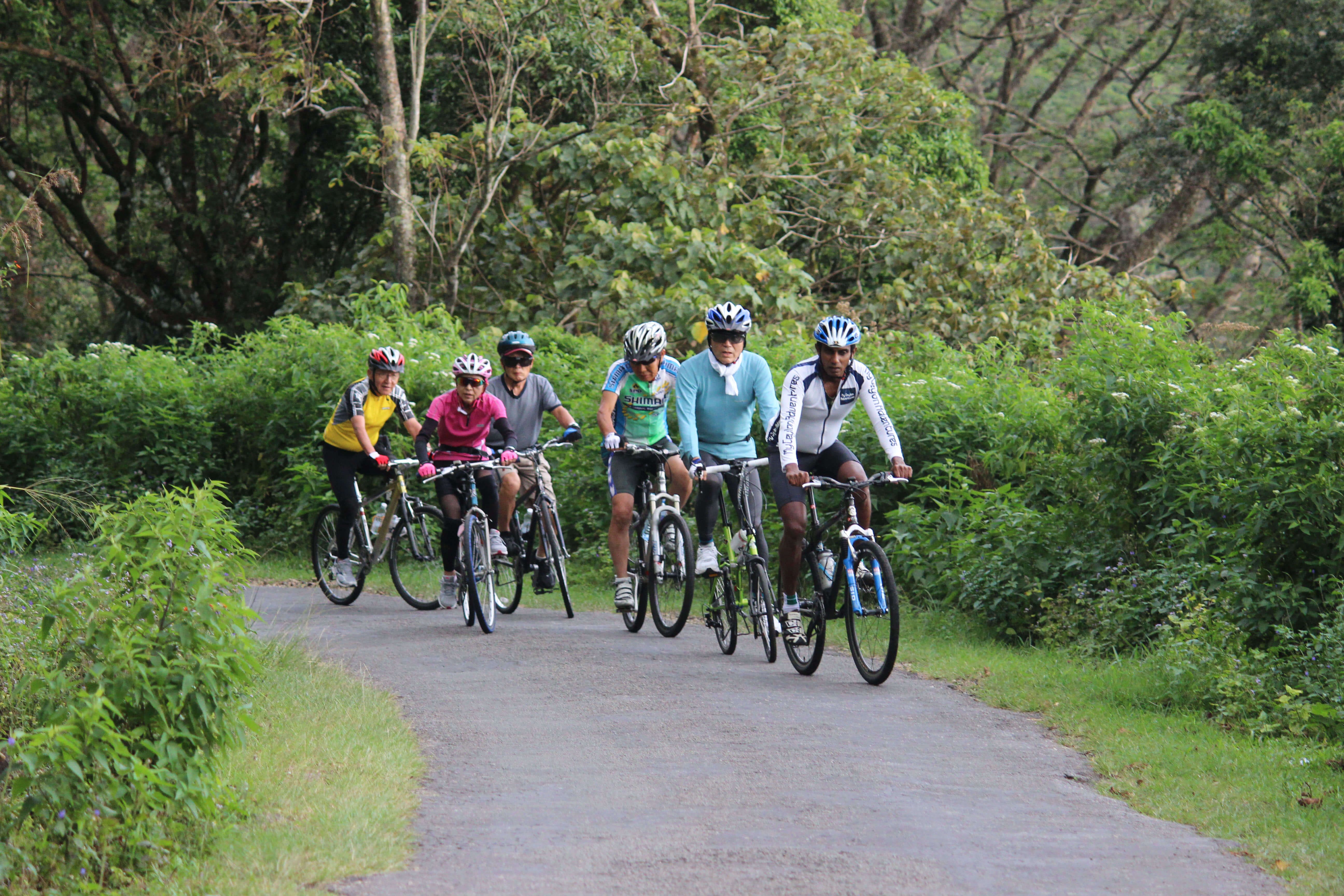
The Kandy ride is the most physically demanding of the four routes and rewards the effort proportionally. The standard route leaves Kandy town on the road toward Hanthana, climbs steadily through the working tea estates of the lower Knuckles foothills (the gradient is consistent rather than severe, but the cumulative climbing of 400 to 500 metres over the morning is genuine work), passes a series of hilltop Buddhist temples, and reaches a high point at one of the open viewpoints overlooking the Kandy valley with the lake, the Temple of the Tooth and the surrounding ridges all spread out below. The descent is the reward — a long, fast, cool drop back through the tea estates with views opening progressively as the road drops. The riding surface is mostly paved estate roads in good condition, with a few short sections of rougher track in the upper reaches. The climate is significantly cooler than the dry-zone routes — Kandy sits at 500 metres and the upland sections of the ride climb to nearly 1,000 — so the heat that limits dry-zone cycling is much less of a factor. The ride is best undertaken with a local guide who knows the back-road route through the tea estates; the main roads in this region carry heavy traffic and are unpleasant to cycle. Total elapsed time is 3 to 4 hours including a tea-stop in one of the estate factories.

🏔️

400–500 m of climbing — basic fitness required

🍃

Tea factory stops included on most guided rides

🌤️

Cooler than the dry zone — pleasant year-round

🗺️

Local guide essential — main roads have heavy traffic

Kandy Tea Estate Climb
Hill
20 km · 400 m climb

Cycling Transfers

We get you to the start, with bikes onboard

Cycling routes need an early start — particularly in the dry zone, where the heat after 10 AM ends the ride. Ahangama Cabs runs transfers to Sigiriya, Habarana, Polonnaruwa and Kandy from anywhere on the island, with vehicles capable of carrying bikes onboard if you prefer your own ride to the local hire fleet.

From Colombo

Sigiriya

3.5 hrs

From Colombo

Polonnaruwa

4 hrs

From Colombo

Kandy

3 hrs

Sigiriya

Polonnaruwa

1.5 hrs